Caribbean & Diaspora Storytelling
About the Book
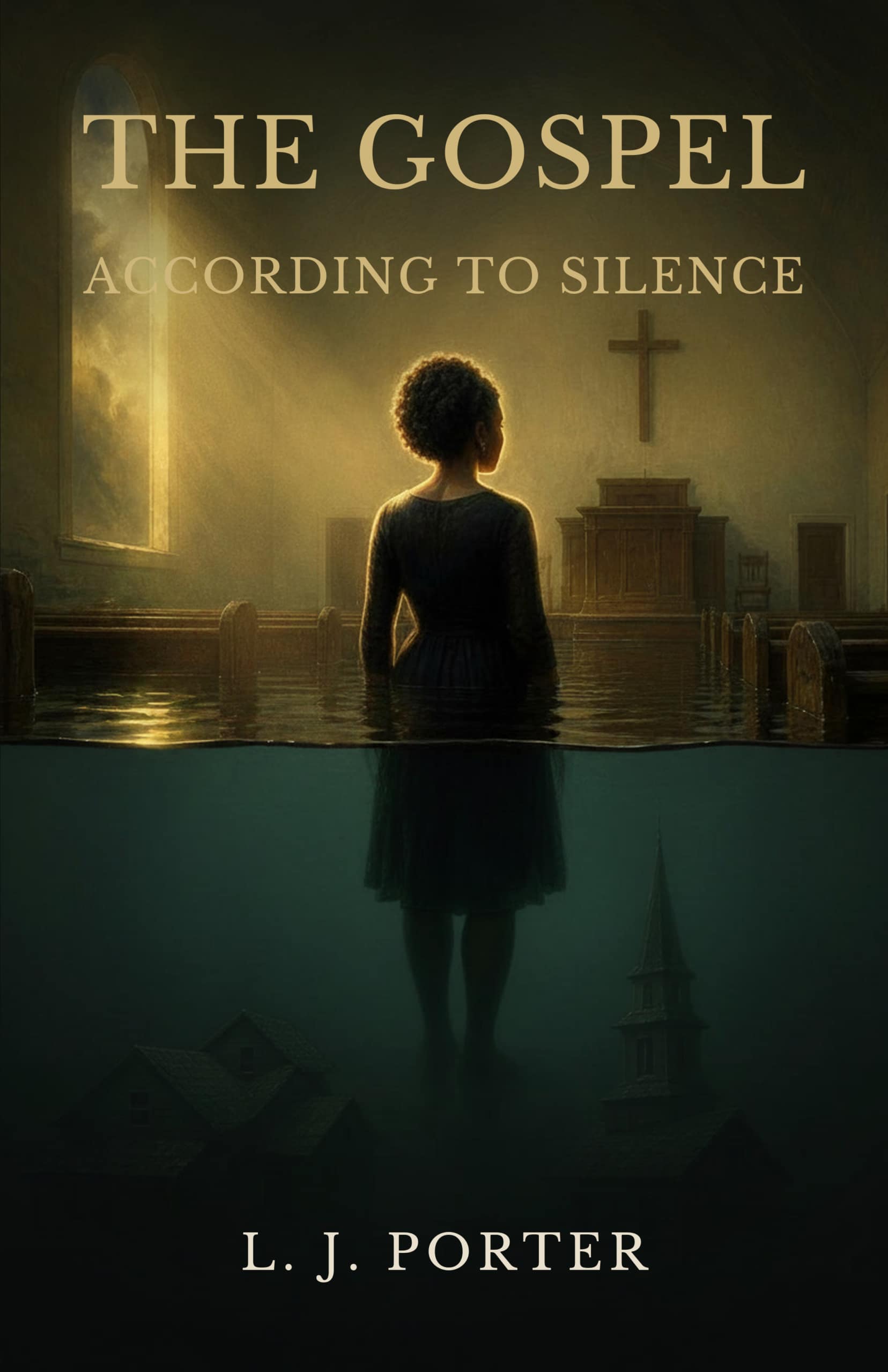
Avery Cole sings prosperity gospel to arenas. She goes home to bury her father and learns what his church was built on, and who paid for it.
A literary mystery about inheritance, faith, and the accounting nobody in a family wants to do out loud.
The church and the city keep each other’s secrets.
Who This Book Is For
Readers who prefer literary mystery to police work, and novels where the institution under investigation is one the protagonist belongs to.
It is for readers drawn to Southern fiction about family, faith, money, public performance, private compromise, and the debts hidden beneath respected institutions.
Faith, family, and institutional silence
A Mystery about What Was Owed
The Gospel According to Silence is not organized around conventional police procedure. Its central investigation is personal and institutional: what Avery’s father built, what the congregation protected, and whose sacrifice made the church’s success possible.
The novel examines prosperity gospel from inside the community rather than from a comfortable distance. Faith is not treated as foolishness, and the church is not reduced to a villain. The danger lies in the bargains people make to protect an institution they believe must survive.
That makes the inheritance Avery receives less like a gift than an unpaid account. Returning home means deciding whether loyalty requires silence—or whether truth is the only remaining form of faith.
Where to start
A Complete Standalone Mystery
No earlier book is required. Begin here with Avery Cole’s return home, her father’s funeral, and the secrets embedded in the church he left behind.
For book clubs
The Gospel According to Silence Book Club Kit
Everything your club needs in one place: twelve discussion questions for three meetings, who’s who, the setting, two recipes from the story, a playlist, and a note from L.J. Porter. Open any section below.
About the Book
Avery Cole is three minutes from walking onstage in front of twenty thousand people when her mother calls to say her father is dead. She lifts the microphone, and no sound comes out.
Her father was the Reverend Doctor Marcus Cole, the builder of New Zion, the gold-steepled church that rises over the Delta town of Blue Earth, Arkansas. Avery drives home for the funeral without a voice and finds a town ready to make him a saint. Then she opens a hymnal hidden in his study and finds two lines written in two different hands, sixty years apart: “1963 — River clearing,” and beneath it, in her father’s writing, “Never speak of this. Never.”
With a half-sister she never knew she had and the elders who have waited a lifetime to be asked, Avery begins to look. The Gospel According to Silence is a novel about inheritance, memory, and what a whole town agrees never to remember.
Who’s Who
- Avery Cole: A famous gospel singer who loses her voice the night her father dies and comes home to Blue Earth for the first time in eight years.
- Reverend Doctor Marcus Cole: Avery’s father, the beloved senior pastor who built New Zion over forty years and is being buried as a saint.
- Mabel Cole: Avery’s mother, the composed First Lady of New Zion, who knows every name in the receiving line and every figure in the church’s books.
- Zora: The teenage half-sister Avery never knew existed, sharp-eyed and impatient, who found the hidden hymnal three months before Avery came home.
- Jules: Avery’s first love, who stayed in Blue Earth when she left and has just been named senior pastor.
- Reverend Clay: Marcus Cole’s mentor, ninety-some years old and the most beloved old man in three counties.
- Ada Washington: A sharp-tongued elder who does not attend New Zion and who has been asking the town to remember “the rest” for sixty years.
- Odessa: The owner of Betty’s Diner, who has known Marcus Cole for fifty years and does not grieve him the way the rest of town does.
- Roosevelt Gaines: An old man at the diner counter who remembers the town “the old way.”
- Miss Betty: A woman who grew up on River Road and has her own sixty-year-old story about the night before the flood.
- Thomas Wright: A retired man in North Little Rock who has kept his brother Samuel’s journal in a drawer for sixty years.
- Deacon Morris: A deacon since before Avery was born, who stands guard at the casket during the viewing.
The Setting
Blue Earth, Arkansas, sits in the flat Delta country of soybeans, cotton, and rice, a few hours’ drive from Memphis. The sign at the edge of town says “Where Faith Runs Deep” and lists a population of 3,247, a number that has not changed in twenty years. The river runs along the town’s western edge behind a long earthen levee, so you cannot see the water from the road.
Front Street runs four blocks, and most of it is closed. Betty’s Diner, “Best Pie in the Delta,” and Clyde’s barbershop hold their corners. Mount Olive Cemetery still keeps its white graves on the high ground near the gate and its Black graves downhill, toward the water.
New Zion stands on Resurrection Drive, white and enormous, with Exodus stained glass and a gold-lit steeple that is the highest point in the county. The Coles live in an 1890 overseer’s house on the high ground at the eastern edge of town. Across the old rail spur are Freedman, Grace, and Bethel Streets. Two miles south, where the paved road gives out, are the bottoms, where River Road used to be. Eleven miles upriver is an old WPA reservoir dam. The story takes place over one hot August and into November.
Discussion Questions
The questions are grouped for three meetings, so your club can read the book in thirds or discuss it all at once.
Meeting One: Prologue and Chapters 1 to 6
- In the Prologue, Avery stands in front of twenty thousand people and makes no sound. In Chapter 1, Sister Patrice explains her silence to the church parking lot: “It’s the grief. Struck her dumb.” Avery realizes that “a thing became true in Blue Earth the moment enough people agreed to say it.” Why do you think the town is so quick to give her silence a kind meaning? Have you ever had your own silence explained for you by other people, and did they get it right?
- In the rain outside New Zion, Ada Washington tells Avery, “You are the only one left who shared his blood and never once took his money. That makes you the only one in this whole county who can afford to look.” Later, in her father’s study, Avery notices that “every photograph was him receiving” and that there is not one picture of him preaching. What do these two moments tell Avery about her father and about her own place in his story? Who in your family, or your community, has been the one who could “afford to look”?
- In Chapter 2, Mabel tells Avery, “Some things keep, Avery,” and asks her to put the folder back in the safe. In the kitchen, Zora wants to post everything that night, and Avery answers, “Truth that’s half-true isn’t truth. It’s just a faster way to lose.” Then, at the end of Chapter 3, Reverend Clay tells her that “some things were never meant to be cleared.” Compare these three ways of handling a dangerous truth. When in your own life have you chosen to wait until you had the whole story, and when have you wished you had spoken sooner?
- At the viewing in Chapter 3, Avery hears story after story of her father’s generosity and realizes that “the good was not a cover for the evil.” In Chapter 4 she leaves the cool, watchful diner for the warm barbershop, where Clyde tells her about the truck her father co-signed, and she understands that “both rooms were right.” Then, in Chapter 6, she discovers what James Booker’s “loan” really was. How does the book refuse to let either room win? Have you ever had to hold two true and opposite things about someone you loved?
Meeting Two: Chapters 7 to 13
- At the reservoir in Chapter 7, Avery does not bully Pelham. Instead she offers him “a way to be blameless.” In the 1985 flashback, Marcus tells his brother, “You’re reading it wrong, Caleb,” and Caleb understands that his brother is asking him to be quiet, not to be wrong. In Chapter 8, Jules tells Avery, “I’m just now understanding I was chosen because I was safe.” What do Pelham, Caleb, and Jules each show about how ordinary people are recruited into silence? Jules says that “not asking is its own kind of knowing.” Is there something you have chosen not to ask about, and what did not asking protect?
- At her kitchen table in Chapter 9, Miss Betty tells Avery that Marcus Cole knocked on her family’s door at two in the morning and saved their lives. She calls him “a man with just exactly enough mercy in his heart to save one family, and not one single drop more.” She tells Avery that the only honest way to tell the story is “so that it never one time sits still.” Why does Ada Washington warn Avery that Betty’s story will be “worse” than the papers? What would it mean for you to tell the story of a difficult person in your life so that it “never one time sits still”?
- In Chapter 10, Roosevelt Gaines tells Avery about the morning his mother signed a paper saying her drowned sister had moved to Detroit. “It ain’t the killing that keeps a thing buried sixty years, girl. Anybody can bury a body. It’s the signing.” He asks Avery to remember that his aunt Verna “made a coconut cake that people talked about.” In Chapter 11, Frances tells her to “put the flood on page one.” Why do you think Roosevelt cares so much that Verna is remembered for her cake, and not just for her death? What phrases, like “moved on” or “Detroit,” does your own family or town use to avoid naming something painful?
- In Chapter 12, Zora tells Avery, “I’m a kept secret with legs,” and describes how Mabel insisted on taking her in: “I will not clean up a living child.” She tells Avery, “You were the flagship. I was the franchise. But it was the same store.” In Chapter 13, Zora posts her accusation against Mabel, and Avery tells her, “You do not get to un-light it once it’s thrown.” How does knowing Zora’s history change the way you read her anger and her mistake? Have you ever told a truth too fast, and what did it cost you or someone else?
Spoiler warning: these questions discuss the ending. Please finish the book before reading further.
Meeting Three: Chapters 14 to 20
- In Chapter 14, Thomas Wright asks Avery “not to let the man they saved wash out the man they buried,” the mirror image of what Betty asked of her. That night, Avery finally remembers the rest of the afternoon at the river when she was nine, and understands: “He had not been teaching her a song. He had been holding a funeral.” How does this memory change your understanding of Avery’s voice, both why she lost it and why it returns? Is there a song, prayer, or family ritual from your childhood that you have come to understand differently as an adult?
- In Chapter 16, Mabel reveals that she is a daughter of River Road and that she taught Clara Washington to sing “Wade in the Water.” She says of her years as First Lady, “I married into mine, and I lived on top of them for forty years, and I taught myself to call them furniture.” Then she nearly burns the last photographs, saying, “Maybe I keep her.” Avery stops the flame with her own hand. Was Mabel’s keeping a kind of love, a kind of cowardice, or both? Have you ever held on to a memory of someone so tightly that you were afraid to share it with the world?
- In Chapter 17, Reverend Clay tells Avery, “I will not be exposed, Avery. I will confess,” and insists that the difference is the only thing he has ever cared about. On his deathbed in Chapter 19, his last words are “Tell them I was a good man,” and Avery understands that “there are some men in this world you simply do not get to defeat. You only get to outlive them.” Did Clay win? What do you think Avery should do with his last request? Have you ever had to accept that someone who hurt you would never be held to account?
- In the flooded sanctuary in Chapter 18, Jules shouts, “There are people under this church!” In Chapter 19, Mrs. Tolliver tells Avery in the Piggly Wiggly parking lot, “I hope Clara was worth it to you.” In Chapter 20, Avery finds her father’s black book and its last entry, a scholarship “for the one I could never bring home,” and at the burial she decides that “you do not belong to a place by owning the paper on it. You belong to it by saying its names.” Does the ending feel like justice, healing, or something else? Whose names in your own family or community deserve to be said out loud?
From the Kitchen
The Drink: Southern Sweet Tea
Sweet tea is everywhere in this book. Avery’s glass of her mother’s sweet tea goes warm and untouched at the kitchen island in Chapter 2. Miss Betty pours her “a jelly glass of sweet tea from a pitcher sweating in the heat” in Chapter 9, and in Chapter 20 the families decide where to bury the fifteen “over paper plates and sweet tea.”
Makes about 2 quarts.
- 8 cups water, divided
- 6 regular-size black tea bags (or 2 family-size bags)
- 1/8 teaspoon baking soda
- 3/4 to 1 cup granulated sugar
- 1 lemon, sliced, for serving
- Fresh mint sprigs, for serving (optional)
- Ice
- Bring 4 cups of the water to a boil in a saucepan, then remove it from the heat.
- Add the tea bags and the baking soda, cover, and steep for 10 to 15 minutes. The baking soda softens any bitterness.
- Remove the tea bags without squeezing them.
- Stir in the sugar while the tea is still hot until it dissolves completely.
- Pour the tea into a 2-quart pitcher and add the remaining 4 cups of cool water.
- Chill for at least 2 hours. Serve over ice with lemon slices and mint.
This drink is alcohol-free. For a less-sweet pitcher, start with 1/2 cup of sugar and add more to taste.
The Dish: Coconut Layer Cake
In Chapter 10, Roosevelt Gaines asks Avery to remember his aunt Verna, who “made a coconut cake that people talked about.” In Chapter 20, the words cut beneath her name on her stone read “SHE MADE A CAKE PEOPLE TALKED ABOUT.” This is a classic Southern coconut layer cake, served in her memory.
Makes one 9-inch, two-layer cake (12 servings).
For the cake:
- 3 cups cake flour, plus more for the pans
- 1 tablespoon baking powder
- 1/2 teaspoon salt
- 1 cup (2 sticks) unsalted butter, softened, plus more for the pans
- 2 cups granulated sugar
- 4 large eggs, at room temperature
- 1 teaspoon vanilla extract
- 1 teaspoon coconut extract
- 1 cup canned unsweetened coconut milk, well stirred
For the frosting:
- 8 ounces cream cheese, softened
- 1/2 cup (1 stick) unsalted butter, softened
- 4 cups powdered sugar
- 1 teaspoon vanilla extract
- 1/2 teaspoon coconut extract
- Pinch of salt
- 2 1/2 cups sweetened shredded coconut
- Heat the oven to 350°F. Butter and flour two 9-inch round cake pans and line the bottoms with parchment.
- Whisk the cake flour, baking powder, and salt together in a bowl.
- In a large bowl, beat the butter and sugar with a mixer on medium speed until pale and fluffy, about 4 minutes.
- Beat in the eggs one at a time, then the vanilla and coconut extracts.
- On low speed, add the flour mixture in three parts, alternating with the coconut milk in two parts, beginning and ending with flour. Mix just until combined.
- Divide the batter between the pans and bake 28 to 32 minutes, until a toothpick in the center comes out clean.
- Cool the cakes in their pans for 10 minutes, then turn them out onto a rack and cool completely.
- For the frosting, beat the cream cheese and butter until smooth. Add the powdered sugar a cup at a time, then the extracts and salt, and beat until fluffy.
- Place one layer on a plate, spread it with frosting, and top it with the second layer. Frost the top and sides.
- Press the shredded coconut all over the top and sides. Refrigerate for 30 minutes before slicing.
Safety notes: The FDA lists coconut as a tree nut for labeling purposes, so check with guests who have nut allergies before serving. Because of the cream cheese frosting, keep leftovers refrigerated and eat them within 4 days.
The Playlist
| # | Artist | Song | Why it fits |
|---|---|---|---|
| 1 | Ramsey Lewis Trio | Wade in the Water | The spiritual at the heart of the novel, the song Avery’s father taught her at the river and the one she sings at the graves. |
| 2 | Andraé Crouch | Soon and Very Soon | The choir sings it at Marcus Cole’s funeral in Chapter 5, so beautifully that “the beauty itself became the argument.” |
| 3 | Mahalia Jackson | Precious Lord, Take My Hand | The great voice of the Black gospel tradition that shaped Avery, sung for grief that has nowhere else to go. |
| 4 | Bessie Smith | Back-Water Blues | A blues about a flood that takes a home away, for the families of River Road. |
| 5 | Charley Patton | High Water Everywhere | A Delta bluesman’s record of rising water and of who gets left on the low ground. |
| 6 | Carla Thomas | Gee Whiz (Look at His Eyes) | An early Memphis hit by a teenage girl singer, the kind of record Clara and Betty dreamed of making at Stax. |
| 7 | The Staple Singers | I’ll Take You There | A Stax gospel-soul classic for the Memphis dream on the back of a feed sack. |
| 8 | Nina Simone | Mississippi Goddam | A furious answer to the violence of the early-1960s South, the world Samuel Wright tried to organize against. |
| 9 | Sam Cooke | A Change Is Gonna Come | A song of long waiting and hard-won hope, for the elders who held the truth for sixty years. |
| 10 | Aretha Franklin | Mary, Don’t You Weep | A spiritual of grief and of Pharaoh’s army drowned, like the Exodus windows over New Zion’s pews. |
A Note from L.J. Porter
Dear readers,
My people are from Amory, Mississippi, and I grew up on hymns that meant two things at once. My grandmother sang them while she ironed, and it was years before I understood that some of those songs were maps, and some were warnings, and some were the only funerals certain people ever got. That is where this book began, with the idea that a song can hold what a town will not say out loud.
I wanted to write about the kind of silence that is not empty. It is full of agreements nobody remembers making, and it is kept by good people as often as by bad ones. Avery’s town loves her father, and that love is real. So is the ground under the church. I did not want readers to have to choose between those truths, because the people I come from have never had that luxury.
I also wanted to honor the keepers, the Ada Washingtons and Roosevelts of the world, who sit on their porches holding boxes and names and wait for somebody to finally come and ask. If you have elders like that, I hope this book sends you to their door.
Thank you for choosing this book, for giving it your evenings, and for talking about it together. In Blue Earth, silence is kept together. I believe the truth can be told together, too, and I am grateful your club chose to tell this one.
With gratitude, L.J. Porter
Frequently asked questions
About The Gospel According to Silence
Is The Gospel According to Silence a standalone?
Yes. The novel tells a complete story and requires no earlier reading.
Is The Gospel According to Silence a crime novel?
It is a literary mystery. Its central question is closer to what was owed—and who paid—than to a conventional police investigation.
Where is the novel set?
In Blue Earth, Arkansas, a small Delta town a few hours’ drive from Memphis, where New Zion’s gold-lit steeple is the highest point in the county. The story runs over one hot August and into November.
What themes does the book explore?
It explores prosperity gospel, inherited debt, family loyalty, public faith, institutional silence, and the moral cost of protecting respected institutions.
Who is L.J. Porter?
L.J. Porter writes literary fiction about Black church life, family inheritance, faith, and silence. Visit the author page.
Is there a book club guide for The Gospel According to Silence?
Yes. The free book club kit on this page has twelve discussion questions grouped for three meetings, a who’s who, the setting, recipes for Southern sweet tea and coconut layer cake from the story, a ten-song playlist, and a note from L.J. Porter.
Get the Next Story First.
Join The Maroon House Reader for advance excerpts, new releases, and notes from the publisher’s desk.