Caribbean & Diaspora Storytelling
Lorna Phillips
Jamaican Literary Fiction · Author of Provision Ground and Swift River
Lorna Phillips writes literary fiction drawn from Caribbean memory and the women who carry it. Her matrilineal line traces to Swift River, in Portland Parish, Jamaica.
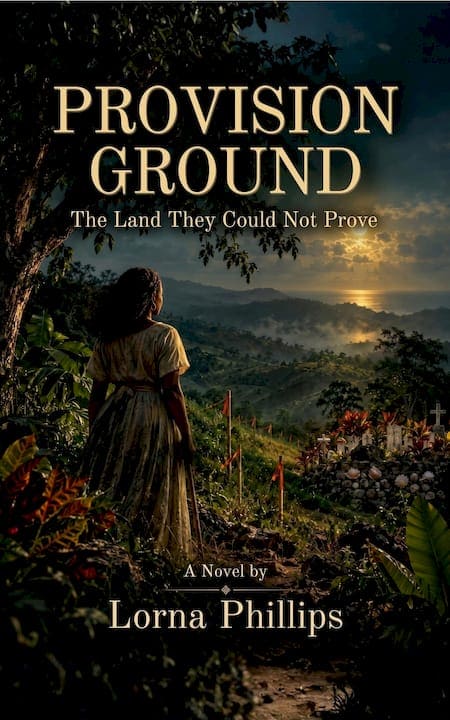
Provision Ground follows a woman who buries her mother and finds nine survey stakes running through the yam hills. The land has been the family’s for a hundred years, and none of it is on paper.
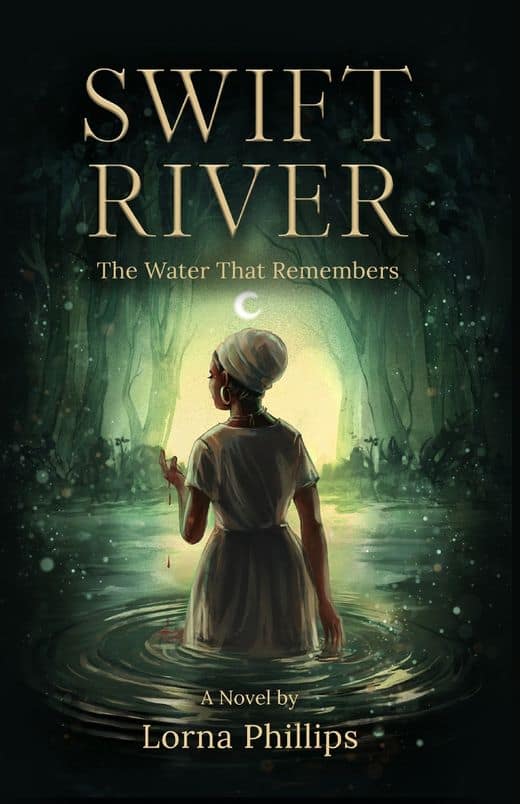
Swift River follows a woman educated in Kingston who comes home certain her mother’s river ritual is only superstition. Phillips is interested in what a family knows, and what schooling teaches it to disbelieve.
About Lorna Phillips
Lorna Phillips is the Jamaican birth name of Nikki Woods. She keeps it for the novels that come from that side of her life.
Born in America to a Jamaican mother, she grew up between the two countries. Her mother’s people come from the Swift River valley in Portland Parish, and that landscape is the ground her literary fiction stands on.
As Nikki Woods, she is a national on-air personality and the former executive producer of The Tom Joyner Morning Show. She is also the author of the bestselling Easier Said Than Done and the novel The Drowning of Maya Sinclair. She wrote her first book at six, about her hamster, and kept writing and publishing all through her years in radio.
As Lorna Phillips, she wrote Swift River: The Water That Remembers, which draws on her own family’s history in the valley. She also wrote Provision Ground: The Land They Could Not Prove, set in the real district of Askenish in Hanover. It braids a present-day fight over land title with the lives of the people who worked the same estate two centuries earlier.
Her novels are published by Maroon House Press. Why the Jamaica novels are published under this name.
What Lorna Phillips writes
Jamaica-centered literary fiction about land, ancestry, water, and generational memory. The novels sit in the interior rather than on the coast, in places where a family’s claim to its own ground was never properly written down, and where what a community remembers has to stand in for what the archive refused to keep.
The recurring subject is inheritance without paper. Who owns a piece of land when the deed was never filed. What passes down a matriline when nothing passes down officially. What happens to a practice when the generation that kept it stops believing in it.
Lorna Phillips is not an invented pen name — it is a Jamaican birth name, and the reason the Jamaica novels carry it is worth reading alongside the books.
The writing is grounded in Caribbean voice without exoticism, and it takes Jamaican belief seriously on its own terms rather than treating it as folklore or genre machinery. Readers looking for the magical realism shelf will find the label doesn’t fit. How that work gets made, from the records up, is in Writing About Jamaica Without the Postcard.
Themes across the work
- Land, ownership, and the difference between holding ground and proving it
- Flood as history — what water takes and what it returns
- Belief treated as knowledge rather than superstition
- What passes down a matriline when nothing passes down on paper
Provision Ground: The Land They Could Not Prove
Askenish, in the parish of Hanover, inland of Lucea. Merline has been in the country a little over two weeks and buried her mother on the ninth day. Then somebody walks a line through her mother’s yam with an instrument, writes a figure in a book, and drives back to Lucea for their dinner.
Nine new pine stakes, orange tape going soft in the sun, running from the guango tree down to the gully. The family has been on that ground for a hundred years. None of it is on paper.
The novel moves between the hillside now and the paper behind it — a declaration of 1801, a survey, a Chief Clerk’s report, conveyances, a certificate of title — and back to Ross-shire, where a boy of eighteen left for the coach at Dingwall in 1790 and never came home. One surname, two families, and a clause an attorney saw no reason to write out. Read more about Provision Ground, or how Scottish names reached Jamaica in the first place.
Swift River: The Water That Remembers
Portland Parish, the 1930s. Between 1932 and 1943 a sequence of floods emptied a valley in the Jamaican interior; the survivors climbed uphill and built again on higher ground. That history is real. The family in the novel is not.
Three generations of women stand in the same cold November water. Agatha Campbell has kept the ritual for fifty-four years, speaking the names of the drowned so the dead are witnessed. Her daughter Clara returns from Kingston with an education and means to break the chain — not out of cruelty, but because she believes the inheritance will ruin her own daughter. Naomi, the youngest, writes the names down anyway.
The novel asks what happens when the witnessing stops. Read more about Swift River, or read the history of the actual village the book was built from.
Where to start
Provision Ground: The Land They Could Not Prove is the newest, and the place most readers are starting now. It does not require anything read before it.
Swift River: The Water That Remembers is the other way in, and the two stand alone. Provision Ground is about what paper does and does not record. Swift River is about what water takes. Either one first.
Readers who have finished it and want the documentary ground underneath usually go next to Swift River, Jamaica, which lays out the floods, the move to New Eden, and what the registers do and do not keep.
For something shorter first, High Water Mark is a free Swift River short story.
Frequently asked questions
Who is Lorna Phillips?
Lorna Phillips is the Jamaican birth name of Nikki Woods, the national radio personality, former executive producer of The Tom Joyner Morning Show, and founder of Maroon House Press. Born in America to a Jamaican mother and raised between both countries, with family roots in Portland Parish’s Swift River valley. She is the author of Swift River: The Water That Remembers and Provision Ground: The Land They Could Not Prove. Why the Jamaica novels are published under this name.
What has Lorna Phillips written?
Swift River: The Water That Remembers, a generational novel set in Portland Parish in the 1930s, available in paperback and on Kindle. And Provision Ground: The Land They Could Not Prove, set in Askenish, Hanover, available in paperback and on Kindle.
Is Swift River based on a true story?
The floods, the dates, the valley and the move uphill to New Eden are historical. The family at the center of the novel is imagined.
What should I read first?
Either. Swift River and Provision Ground both stand alone and need no prior reading.
The Maroon House Reader
First look at every new title, straight from the publisher’s desk.
Excerpts before release, notes on what we’re acquiring, and the occasional dispatch from Jamaica. Sent when there’s something worth sending.
One email at a time. Unsubscribe whenever you like.