
Caribbean Folklore Creatures: Names, Meaning, and Origins
Caribbean folklore creatures are the spirits, shapeshifters, and monsters that populate the oral traditions of the islands, blending African, Indigenous, and European belief systems into figures that still shape how Caribbean communities talk about danger, memory, and the natural world. Ask a Jamaican grandmother, a Trinidadian storyteller, or a Dominican elder to name one, and you’ll likely hear about the Soucouyant, River Mumma, Rolling Calf, Anansi, La Diablesse, Ciguapa, Papa Bois, and Jumbee. This guide walks through each of these figures on their own terms, then digs into where they came from, why they endure, and how to read them as cultural memory rather than simple monster stories.
- Soucouyant
- River Mumma
- Rolling Calf
- Ciguapa
- La Diablesse
- Papa Bois
- Jumbee (Jumbie)
- Anansi
- Douen
- Lusca
Key Takeaways
Caribbean folklore creatures function as cultural memory encoded in narrative, blending African, Indigenous, and European traditions into figures that still teach, warn, and preserve identity today.
| Point | Details |
|---|---|
| Core figures span the region | Soucouyant, River Mumma, Rolling Calf, Ciguapa, La Diablesse, Papa Bois, Jumbee, and Anansi anchor most island traditions. |
| Origins are syncretic | Most creatures blend African cosmology, Taíno or Kalinago belief, and European folk Catholicism into new forms. |
| Gendered figures carry history | Scholars link the monstrous framing of female figures like the Soucouyant to colonial-era transmogrification of respected roles. |
| Stories carry practical function | Recorded deterrents for beings like the Rolling Calf show these tales doubled as community safety knowledge. |
| Literature keeps the tradition active | Maroon House Press publishes Caribbean fiction that treats folklore as structural memory rather than genre decoration. |
Table of Contents
- Notable Caribbean Folklore Creatures and What Makes Each One Unique
- What These Legends Actually Mean: Syncretism, Gender, and Nature
- How Caribbean Folklore Survives: Oral Tradition, Ritual, and Modern Retellings
- Why These Figures Still Matter to Caribbean Storytelling
- Folklorists and Researchers Behind These Stories
- How These Legends Have Changed Across Generations
- Caribbean Monsters in Film, Music, and Contemporary Art
- A List That Puts Meaning Ahead of Spectacle
- Where to Read More Caribbean Folklore in Fiction
- Frequently Asked Questions
- Sources
Notable Caribbean Folklore Creatures and What Makes Each One Unique
Every island chain has its own cast of beings, but a handful of names surface again and again across Trinidad, Jamaica, the Dominican Republic, and the wider archipelago. Here’s what separates them.
- Soucouyant. Found in Trinidad, Saint Lucia, and Guyana, the Soucouyant appears as an old woman by day and sheds her skin at night to fly as a fireball, hunting victims for their blood. Folklore ties her to a demon named Bazil and the silk cotton tree, a detail that recurs across several Caribbean spirit stories. Communities read her less as a random monster and more as a warning about isolation and unchecked hunger.
- River Mumma. Jamaica’s protective river spirit combs her long black hair at riverbanks and guards freshwater sources from disrespect. Researchers studying Revival Zion religion describe her as a healer and figure of cultural memory, blending British, Amerindian, and African elements into one composite guardian.
- Rolling Calf. This Jamaican duppy takes the form of a three-legged bull or goat with blazing red eyes and rattling chains, often linked to cotton trees and caves. Folk sources record precise ways to escape one, including a mirror or moonlit reflection, a tarred whip held in the left hand, or planting a double-bladed knife in the ground.
- Ciguapa. The Dominican Republic’s forest dweller has backward-facing feet and impossibly long hair, and she’s rumored to lure men into the woods with a siren’s pull. Her origin remains debated between Taíno roots and later creolized retellings, and her meaning has shifted with the national mood each generation reshapes her in.
- La Diablesse. This elegant woman with one cow’s hoof appears on lonely roads across Trinidad, Martinique, and Saint Lucia, seducing travelers before revealing her true form. She functions as a caution against vanity and wandering after dark, a theme that shows up in oral traditions documented by regional folklore collectors.
- Papa Bois. Known across Trinidad and the French Antilles, this horned forest guardian protects animals and punishes hunters who take more than they need. He’s the clearest environmental steward in the Caribbean bestiary, a living rule against overhunting long before conservation had a name.
- Jumbee (Jumbie). This is an umbrella term for malevolent spirits across the English-speaking Caribbean, and it covers wildly different local beings rather than one fixed creature. Terminology varies by island, tied to specific practices like jumbie dances and ritual offerings.
- Anansi. The trickster spider of Akan origin, carried to the Caribbean through the transatlantic slave trade, outwits stronger animals through cleverness rather than force. Anansi stories doubled as coded lessons in survival for enslaved communities, and the character remains one of the most recognized figures in Caribbean storytelling.
- Douen. These are the spirits of children who died before baptism, recognizable by backward feet and wide straw hats, wandering forests and calling out in the voices of living children to lure them away. The figure reinforces old warnings about supervising children near forests and riverbanks.
- Lusca. A shark-octopus hybrid said to lurk in Bahamian blue holes, the Lusca drags boats and swimmers into underwater caves. Less documented than the others, it still circulates strongly in Bahamian oral tradition as an explanation for unexplained drownings near coastal sinkholes.
Deterrent rituals recorded for the Rolling Calf alone include mirrors, a tarred whip, and a buried double-bladed knife — a level of specific, practical folk knowledge that shows these weren’t just scary bedtime stories but functional safety rules passed between generations.
What These Legends Actually Mean: Syncretism, Gender, and Nature
Caribbean folklore creatures rarely emerged from a single tradition. Most blend West African cosmology, Indigenous Taíno or Kalinago belief, and European Christian imagery into something new, shaped by the specific violence of plantation society.
- African cosmology supplies the shapeshifting logic behind the Soucouyant and the trickster architecture of Anansi.
- Taíno and Kalinago traditions contribute forest and water spirits like elements of Papa Bois and the Ciguapa.
- European folk Catholicism adds the demon-pact framing found in stories about skin-shedding hags and roadside seductresses.
Folklorists including Martha Warren Beckwith documented this blending directly in early 20th century Jamaican fieldwork, treating these figures as evidence of cultural survival rather than superstition. A striking pattern runs through the gendered figures especially: the Soucouyant, La Diablesse, and Ciguapa are all women transformed into threats, and scholars researching this shift argue it wasn’t accidental.
Many female folkloric figures were transmogrified over time, with originally ambivalent or even respected figures reshaped into frightening monsters under colonial influence.
That reframing turned female independence and sexuality into danger narratives, a pattern documented in research on Indigenous and African women in Caribbean folklore. Meanwhile, figures like River Mumma and Papa Bois carry the opposite function: they police how communities treat rivers and forests, encoding real ecological limits into stories that outlasted the colonial institutions that tried to erase them.
How Caribbean Folklore Survives: Oral Tradition, Ritual, and Modern Retellings
These stories traveled first through spoken performance: elders warning children at dusk, jumbie dances marking specific ritual occasions, and practical “rules” for avoiding named spirits passed down like safety instructions. Practitioners still teach specific deterrents tied to particular beings, from crossing water to counting grains of rice, functional knowledge as much as narrative.
- Oral performance and community ritual remain the original and still-active transmission method.
- Ethnographic recording by scholars like Beckwith preserved versions that might otherwise have faded.
- Caribbean novelists, poets, and small presses now carry folklore into contemporary literature, including work explored in Maroon House Press’s writing on Caribbean ghost stories.
- Festivals and storytelling events across the islands keep these figures visible outside the page entirely.
Pro Tip: When you retell or write about a Caribbean legend, name the island and cultural context it comes from rather than treating it as generic “Caribbean myth.” These figures carry specific regional meaning, and flattening them erases exactly what makes them worth preserving.
Why These Figures Still Matter to Caribbean Storytelling
Maroon House Press exists to publish stories rooted in Jamaica, the wider Caribbean, and the Black diaspora, with particular attention to memory, inheritance, and folklore as literary material rather than decoration. Folklore creatures like the Soucouyant or River Mumma aren’t just spooky footnotes. They’re recurring structures Caribbean writers return to when working through migration, ancestry, and what colonial record-keeping left out.
Folklore functions as a repository of communal memory, and the figures built from it carry real cultural work well beyond fear.
Folklorists and Researchers Behind These Stories
The scholarly record on Caribbean folklore creatures runs deeper than most casual retellings suggest, and three sources anchor most serious research on the topic. Martha Warren Beckwith’s early ethnographic fieldwork in Jamaica documented Caribbean folklore as a living, syncretic system decades before academic folklore studies took the region seriously, and her work remains a reference point for later researchers.
More recent scholarship published through Shimajournal traces River Mumma’s connection to Jamaican Revival Zion religious practice, arguing that her stories function as active spiritual technology, not dead legend. That research treats her as a healer and guardian figure who continues to shape how some Jamaican communities relate to rivers today.
A third strand of scholarship, published through the University of Puerto Rico’s institutional repository, examines how colonial pressure reshaped Indigenous and African women’s folk figures into monstrous forms. This research matters because it reframes creatures like the Soucouyant and La Diablesse as evidence of historical gender politics rather than isolated ghost stories. Together, these three bodies of work give readers a way to take these legends seriously as cultural documents, not campfire filler.
How These Legends Have Changed Across Generations
Caribbean folklore creatures didn’t arrive fully formed. They’ve shifted with each era’s anxieties, technologies, and political pressures. Plantation-era versions of figures like the Soucouyant often carried explicit warnings about trust and betrayal within enslaved communities, coded messages that outsiders wouldn’t easily decode.
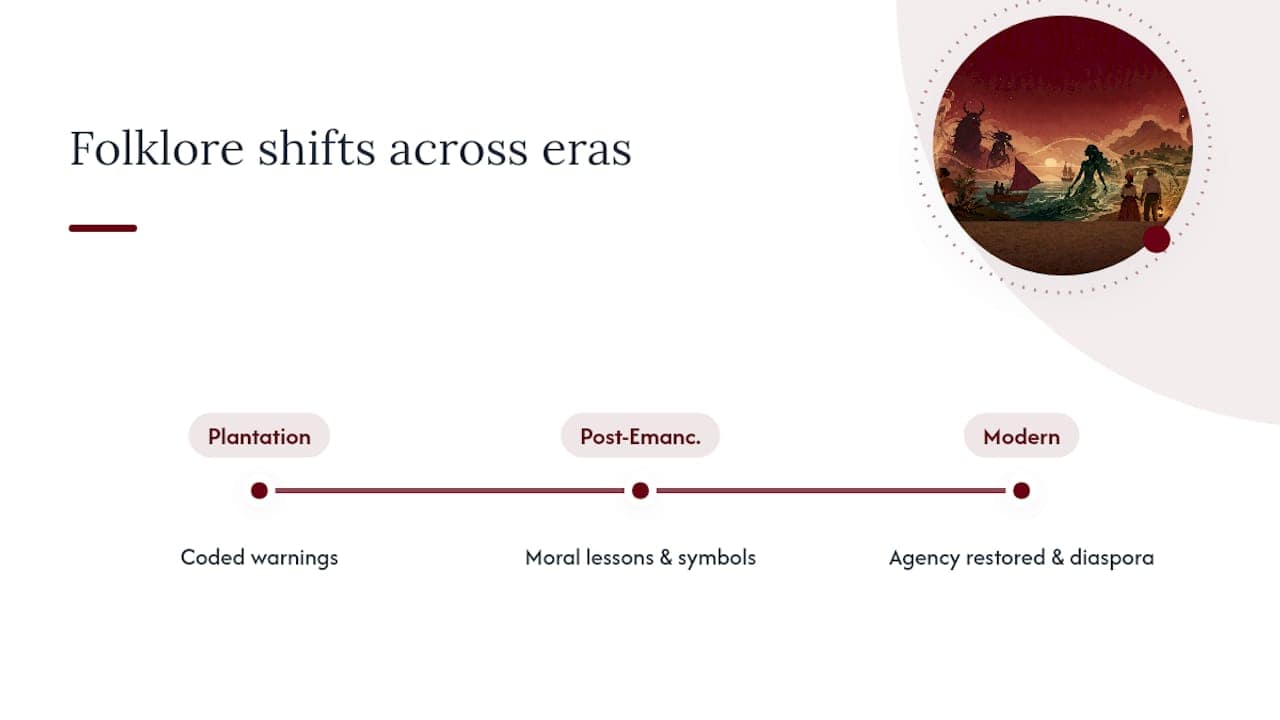
Post-emancipation storytelling shifted some of these figures toward moral instruction aimed at children and young women specifically, reinforcing social boundaries around behavior, dress, and mobility. The Ciguapa’s meaning in the Dominican Republic has moved through several distinct phases, from a Taíno-linked forest spirit to a nationalist symbol used in 20th century literature to represent an untamed, pre-colonial identity.
Modern retellings increasingly restore agency to female figures that colonial-era versions flattened into pure threat, a shift scholars connect directly to renewed interest in how these figures were transmogrified in the first place. Jumbee traditions have also fragmented and multiplied rather than converging. Different islands maintain distinct local variants under the same umbrella term, and that diversity is a sign the tradition stayed alive and responsive rather than freezing into a single canonical version. Digital storytelling and diaspora communities are now adding new layers, translating these figures for audiences several generations removed from the islands where the stories originated.
Caribbean Monsters in Film, Music, and Contemporary Art
Tales of Caribbean monsters have moved well past oral tradition into film, music, and visual art, often reaching audiences who’ve never set foot in the region. Caribbean and diaspora filmmakers have drawn on Anansi and jumbee traditions for genre work that blends horror conventions with specifically Caribbean cultural texture, rather than importing generic ghost-story tropes wholesale.

Music carries these figures too. Calypso and soca artists have referenced Soucouyant and La Diablesse imagery for decades, using the fear and moral weight of these stories as shorthand within songs about temptation, betrayal, or supernatural consequence. Visual artists across the Caribbean and its diaspora regularly return to River Mumma and Papa Bois as subjects, often reworking them as symbols of environmental urgency given rising concern over coastal erosion and freshwater scarcity across the islands.
Literature remains the most sustained vehicle for this material. Caribbean novelists increasingly treat folklore creatures as structural elements within literary fiction rather than genre decoration, using them to explore migration, inherited trauma, and the gaps in colonial record-keeping. That approach is central to Maroon House Press’s own catalogue, where folklore functions as connective tissue between historical memory and contemporary storytelling rather than a nostalgic aside.
A List That Puts Meaning Ahead of Spectacle
Most roundups of Caribbean folklore creatures treat them like a checklist of scary trivia, an approach that flattens exactly what makes these stories valuable. The Soucouyant isn’t just a fireball with a taste for blood. She’s evidence of how colonial society turned independent women into cautionary tales, and that context changes how you should read her.

The conventional advice on this topic, if there is any, tends to stop at description: what a creature looks like, where it supposedly lives, how to escape it. That’s a starting point, not an ending one. The more useful question is why a given island needed this particular story, and what it protected, warned against, or preserved once the people who first told it were gone.
If you take one thing from this list, prioritize context over collection. Knowing eight or ten creature names is trivia. Understanding that River Mumma encodes real rules about river stewardship, or that Papa Bois functioned as conservation policy before the term existed, is closer to what these stories were actually built to do.
Where to Read More Caribbean Folklore in Fiction
If these figures pulled you in, the next step is reading how Caribbean writers actually use them. Maroon House Press’s catalogue treats folklore as connective tissue between memory, migration, and identity rather than genre window dressing.

Start with Maroon House Press’s Caribbean fiction list, which gathers titles where folklore, ancestry, and history intersect on the page rather than staying background noise. For readers drawn specifically to spirits and hauntings, the essay on Caribbean ghost stories as memory rather than horror unpacks how these narratives function differently than Western ghost story conventions. And for the literary fiction shelf broadly, Maroon House Press’s black literary fiction collection features work rooted in the same syncretic, historically grounded storytelling this article has been tracing. Browse the fiction list, pick one title that pairs with a creature you just read about, and start there.
Frequently Asked Questions
What are Caribbean folklore creatures?
They’re the spirits, shapeshifters, and monsters passed down through oral tradition across the Caribbean islands, blending African, Indigenous, and European belief into figures like the Soucouyant, River Mumma, and Anansi.
What is the difference between a Jumbee and a duppy?
Jumbee is a broad term used mainly in the English-speaking eastern Caribbean for malevolent spirits, while duppy is the Jamaican equivalent term covering a similarly wide range of ghost and spirit types, including the Rolling Calf.
Is River Mumma dangerous or protective?
River Mumma is primarily protective. She guards rivers and pools from disrespect and functions as a healer within Jamaican Revival Zion tradition, though folklore warns that trying to capture her can cause a river to dry up.
Where does the Soucouyant legend come from?
The Soucouyant appears mainly in Trinidad, Saint Lucia, and Guyana, and folklorists trace her shapeshifting, blood-drinking traits to a blend of West African spiritual beliefs and later colonial-era retellings.
Are these legends still told today?
Yes. Oral storytelling and community ritual remain active, and Caribbean writers and publishers, including Maroon House Press, continue carrying these figures into contemporary fiction and essays.
Sources
- Soucouyant — Wikipedia
- Rolling Calf — My-Island-Jamaica
- River Mumma: Fluid crossings and mermaid spirits in Revival Zion religion — Shimajournal