Reading the 1834 Compensation Records
In 1834, the British government paid £20 million to slave owners.
Not to the people who had been enslaved. To the people who had owned them, as compensation for the loss of what the law had defined as their property. It was roughly forty per cent of the national budget. The loan raised to pay it was not fully discharged until 2015.
That payment generated paperwork, and the paperwork survives, and University College London has made it searchable and free.
For anyone tracing a Caribbean line it is one of the most useful bodies of record in existence — and one of the most misread. This is what an entry actually contains, what it does not, and how to use it without drawing the wrong conclusions.
What the records are
Abolition required valuation. Before anyone could be paid, every enslaved person in every British colony had to be counted, classified and priced.
Claims were filed by owners, mortgagees, trustees and executors. A Compensation Commission assessed them, resolved competing claims to the same people, and authorised payment. The resulting files — claims, counterclaims, awards, correspondence — are held at The National Archives in series T71.
UCL’s Legacies of British Slavery project indexed them and put them online. You can search by surname, by estate, by parish, by colony. No subscription.
What a single entry contains
Take a typical Jamaican claim. You will usually find:
- The claim number and the colony and parish
- The estate name
- The number of enslaved people attached to the claim
- The award — the sum paid, in pounds, shillings and pence
- The claimant or claimants, with their role: owner, mortgagee, trustee, executor
- Associated individuals — often a network of relatives and business partners
- Sometimes counterclaims, where more than one party asserted ownership
The claimant records are the richest part. UCL linked them to wills, addresses, other estates, family connections and, in many cases, what the money was subsequently spent on in Britain.
What it does not contain
The names of the people.
This is the thing to understand before you start, because otherwise you will search for hours looking for something structurally absent. Compensation was calculated on categories and numbers — so many praedial attached labourers, so many head people, so many children under six, each class carrying a different valuation. The enslaved appear as a count and a value.
For individual names you need the slave registers, filed roughly every three years between 1817 and 1832, also at The National Archives in series T71. Those list first names, ages, colour classification, and often whether the person was African-born or Creole.
The two sets work together. Compensation tells you the estate and the owner. The registers tell you who was on it.
Three things people get wrong
The claimant is not necessarily the person on the ground. Absentee ownership was normal. A claim filed from Glasgow or Bristol tells you who held the legal title, not who ran the estate. The overseer, the attorney, the bookkeeper — the people whose surnames often ended up on Jamaican families — frequently appear nowhere in the claim.
A surname match is not a family connection. If your name is Gray and a Gray filed a claim in Portland Parish, that is a lead, not a finding. Most Caribbean families carry the surname of an owner, an overseer, an estate or a minister, and there is usually no way to tell which without other documents.
Counterclaims mean the record is contested, not that it’s wrong. Estates were mortgaged, inherited and disputed constantly. Multiple claimants on one estate is normal and the files that result are often the most informative ones.
How to search it
Start with the estate, not the person, if you know it. Estate names are stable across decades and surnames are not.
If you only have a surname and a parish, search the surname within the colony and read every result. Jamaican parishes are small and the number of claims per parish is manageable.
Note the claim number when you find something. That number is your route into T71 at The National Archives if you want the underlying file rather than the index entry.
Then cross into the registers. Same series, different set. You are looking for the estate name you just found, and the list of first names attached to it in 1817, 1820, 1823, 1826, 1829 or 1832.
What it feels like to read
I found the Portland Parish entries I was looking for on an ordinary afternoon, in a browser tab, next to my email.
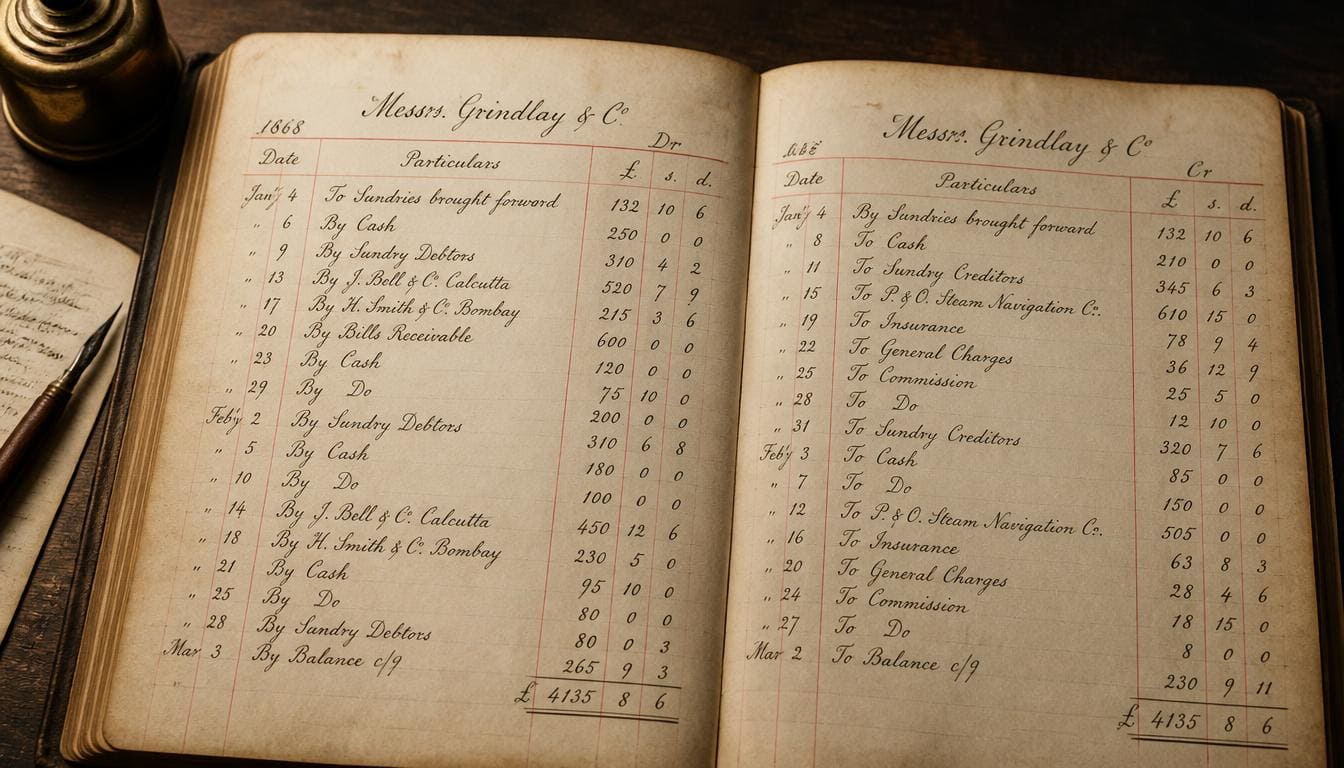
The formatting is bureaucratic. The sums are exact to the shilling. The columns are clean. And what the document is recording, in that clean formatting, is the price the British state assigned to people, paid to the men who had held them, on the occasion of no longer being permitted to hold them.
There is no way to prepare for that and I would not try. But I will say this: the record is not a wall. It is a door with the wrong name on it. Everything you need is on the other side, and the estate name is the handle.
I wrote the full method out — the five sets of records, the order to open them, and the traps in each one.
Read the Names — a free twelve-page guide to finding your family in the Jamaican records → /read-the-names/
Frequently asked questions
What are the 1834 slave compensation records?
Records of the £20 million the British government paid to slave owners at abolition, including claims, awards and claimant details. Held at The National Archives in series T71 and searchable free through UCL’s Legacies of British Slavery database.
Do the compensation records name enslaved people?
No. They record numbers and valuations by category, not individual names. For names, use the slave registers of 1817 to 1832.
Were enslaved people compensated?
No. The payment went entirely to owners. The formerly enslaved received nothing and were required to serve a further period of unpaid apprenticeship until 1838.
Is the Legacies of British Slavery database free?
Yes, it is free to search and requires no account.
How do I find my ancestor’s estate?
Work backwards through civil registration and parish registers to a district, then search compensation claims for that parish. The estate name is usually the link between the two.